
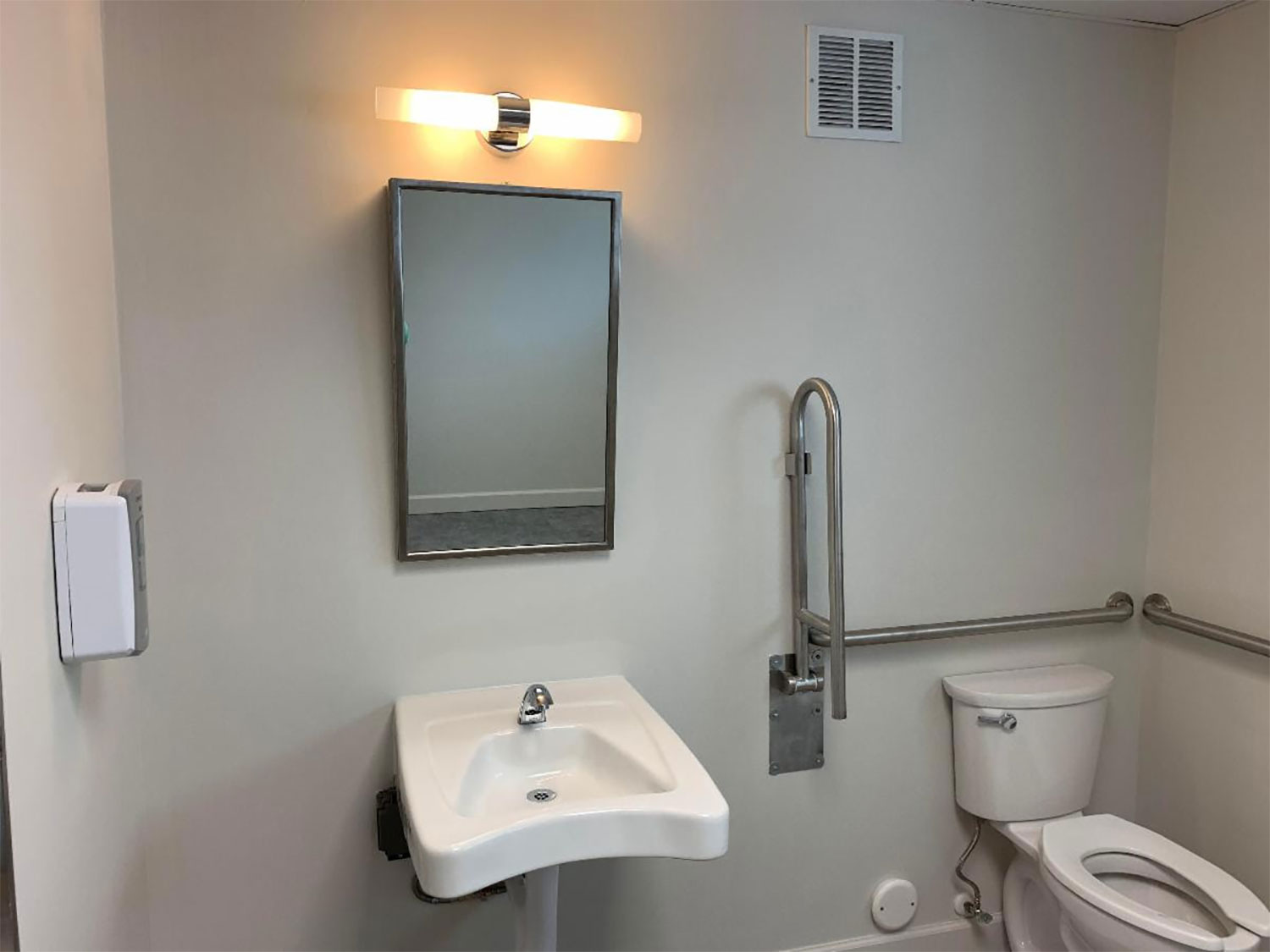
How often have you or someone you cared about struggled to use a bathroom due its small size, heavy door, or lack of accessible features? Maybe it is because you were trying to use the bathroom and you had a young one in your arms (or the stroller wouldn’t fit in the stall). Maybe you broke a foot and were on crutches. Maybe you use a walker or wheelchair to use the bathroom. Maybe you have an aging parent or partner who is less steady on their feet than they used to be. Or maybe for a variety of reasons you have a catheter or diapers.
We as a society don’t like to talk about toileting. It makes us uncomfortable. Some people think it is a private matter. Some think it’s disgusting. Some don’t like to think about the fact that one day their bodies too might not do the things they want them to do.
As Bennett got older, toileting issues became a challenge. He no longer fit on the baby changing stations—they were built for babies, not children (or adults). He wasn’t strong enough to sit up on a toilet—although thanks to Spinraza, we were beginning to explore that possibility. And whether we were in a changing room for the pool or a reststop restroom, we often had difficulty finding safe and clean spaces to care for his toileting needs. Sometimes the cleanest space was on the floor with changing supplies we had brought along to keep him comfortable and safe. As I looked to his future, I began to be concerned for his privacy. We needed to create spaces where his dignity could be maintained, where he would not be forced to enter a women’s restroom when there were only female adults there to support him.
For over a decade now, I have been reaching out to spaces in the community where my family experienced toileting needs: at school, at the pool, at my church, at work. And especially at public playspaces. The goal was not just to make things easier for my family, but for others as well. We hit a few procedural bumps in the road as we to make these places more accessible: limitations of existing structures, lack of understanding about the wide variety of needs or of the law/building codes, and always, money. There are some things that can be easily changed and adapted and others that take a bit more time. I am delighted to share that our community finally has the first publicly accessible adult changing table at Pen Park. We worked closely with Parks and Recreation on the design of the space and they funded it and oversaw the construction. I had several families share with me at Party in the Park how transformative it is to have a space like this at Bennett’s Village. Over time, I hope adult changing tables will become a common site in bathrooms in schools, churches, and businesses. For now, I will celebrate that at Pen Park, the family accessible bathroom will support the needs of children or adults who may need a safe place to sit or lie down to assist with toileting needs.
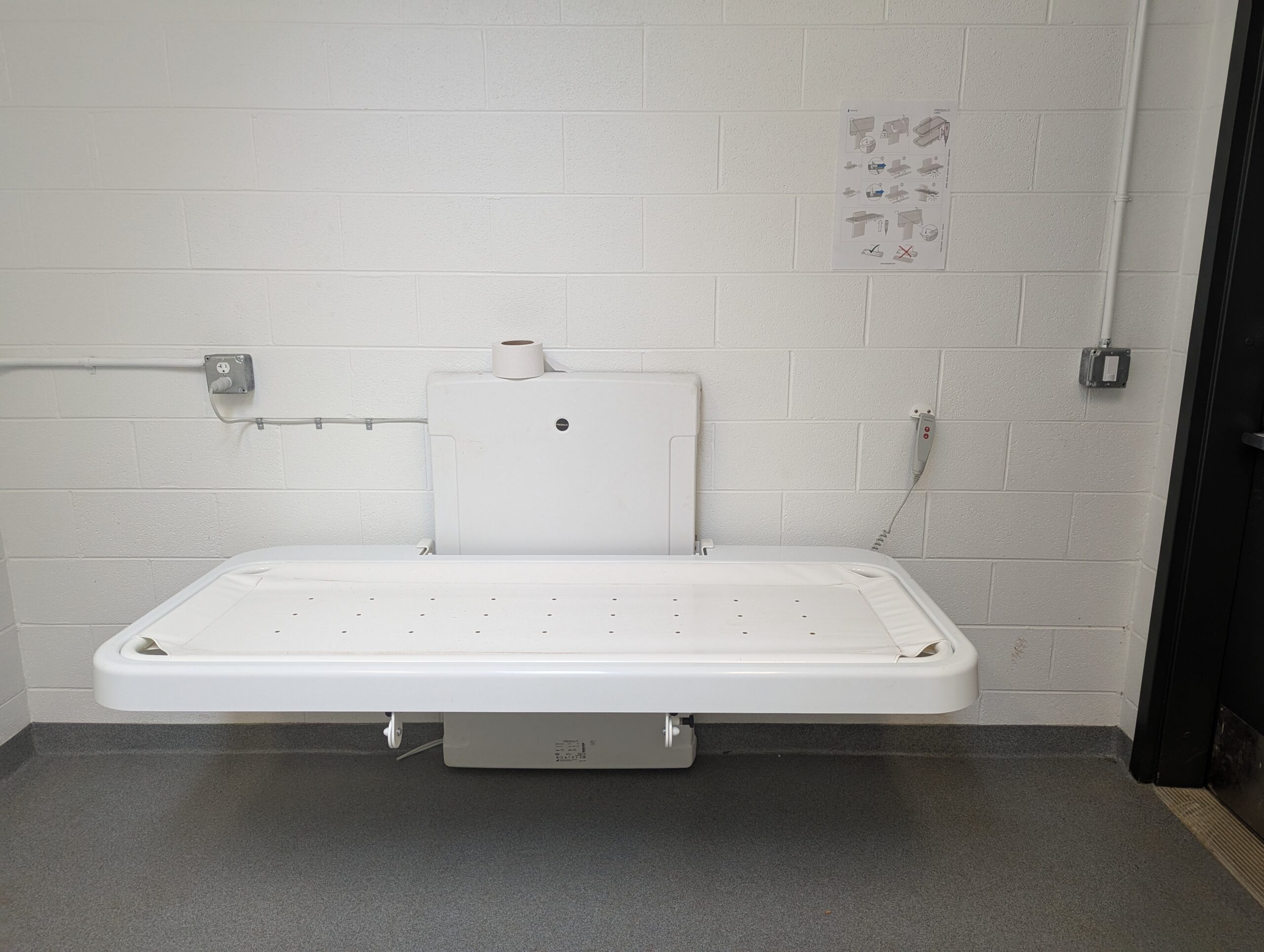
The adult changing table in the accessible bathroom at Pen Park will support the toileting needs of many community members who need additional assistance or support.
Lack of safe, accessible bathroom spaces can prevent individuals who need a bit more space or assistance from staying as long as they’d like or even visiting at all. Although there are some accommodations mandated by the Americans With Disabilities Act, in reality they do not do enough for many of our community members. We at Bennett’s Village know this, and will design our bathrooms with that in mind.
Look around at some of your favorite places to go? How inclusive are the restrooms? Are there people who might not go to those places because the bathrooms are not designed to support their needs? What can you do about making our community a more inclusive, safe place for all to be?